
Digital Inclusion
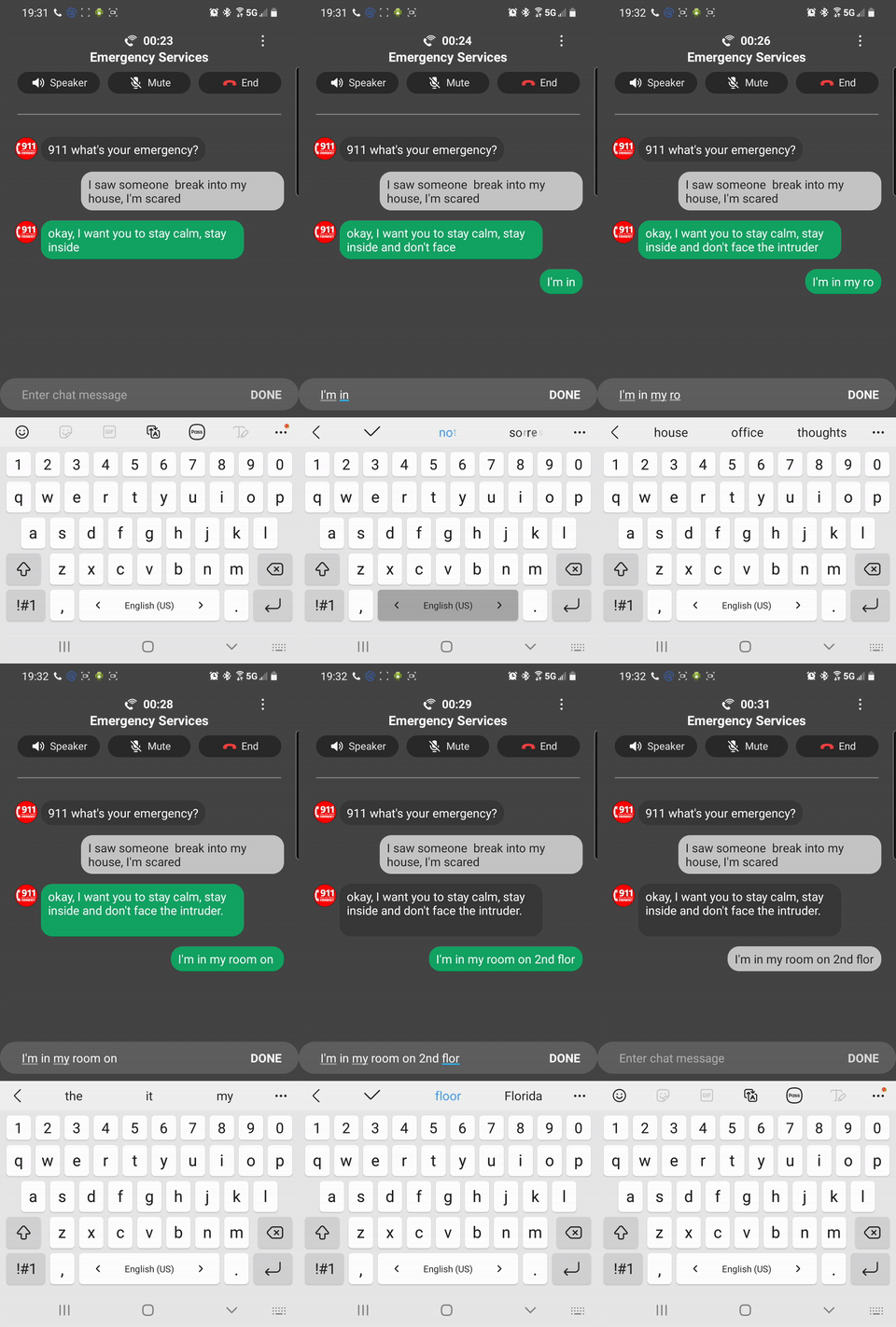
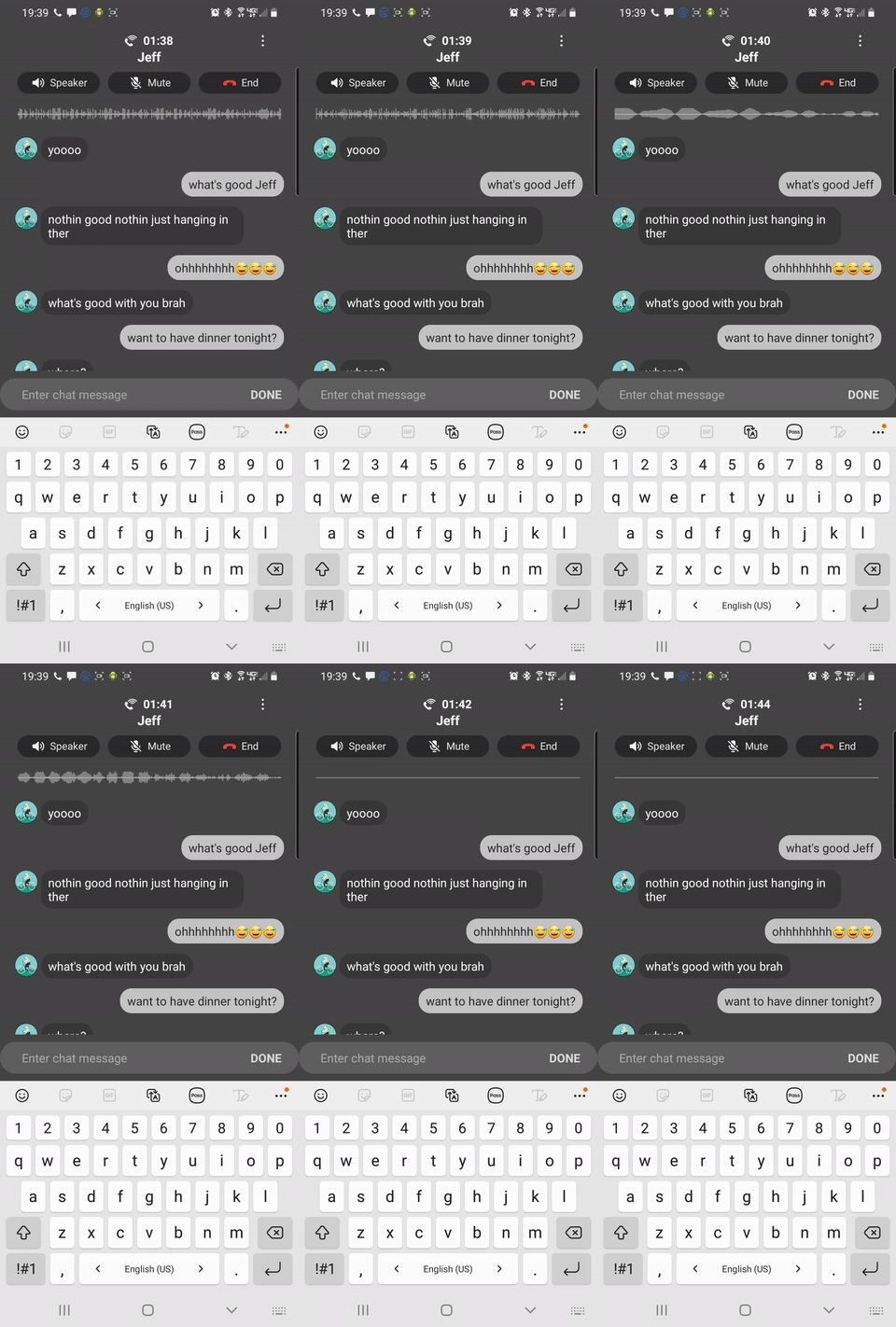
Call app for Users who can’t Speak
Our app bridges communication gaps for users who cannot speak, promoting digital inclusion and enhancing accessibility for everyone.
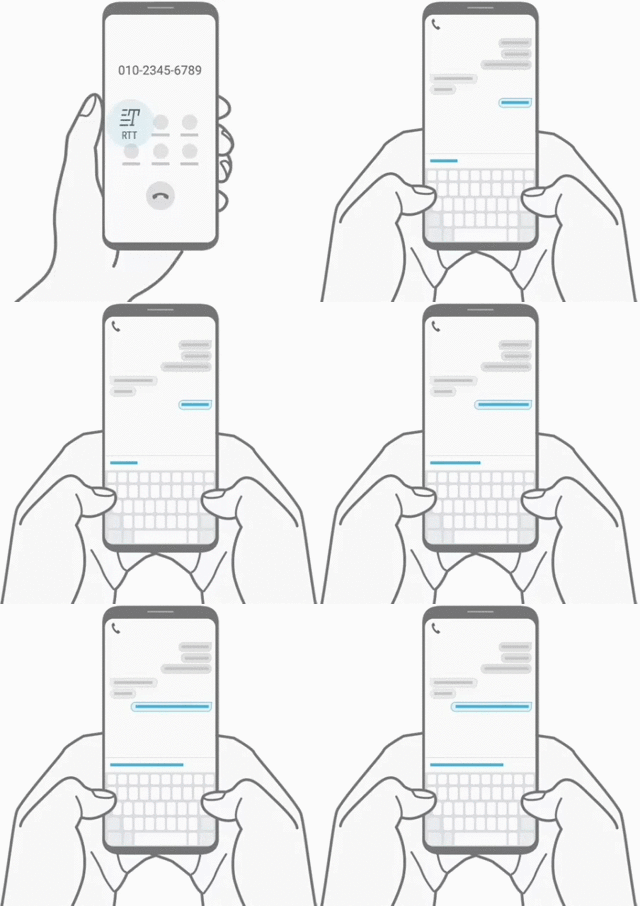
Not everyone can communicate using voice
Imagine a world where everyone spoke a different language, even your family. You’d miss out on casual conversations, struggle to order food, or feel lost when trying to make a simple call. Your family would laugh and joke, and you’d be left wondering what was so funny.
It would be pretty isolating, wouldn’t it?
Deaf and hard of hearing people experience this every day.
Far too many deaf children grow up watching their parents revolve around them like planets in orbit- visible, but distant. Fast food workers refuse to give deaf people service at the drive-through window. Calling the bank, an airline, or the electric company usually results in being hung up on. Imagine how frustrating that must be.
Now imagine what it feels like when communication works. When someone finishes a sentence for you. When you’re at the world’s most boring party and you’d rather be at home watching Netflix, and you lock eyes with your date across the room and the next thing you know, they’re off the sofa and saying, “Thank you so much for having us, but I think it’s time for us to head out.”
Emergency calls
Emergency (911) Services are rarely “One Call Away” for Deaf users
Never able to use native Phone app for communications
DHH users rely on TTY devices and Video relay services to communicate
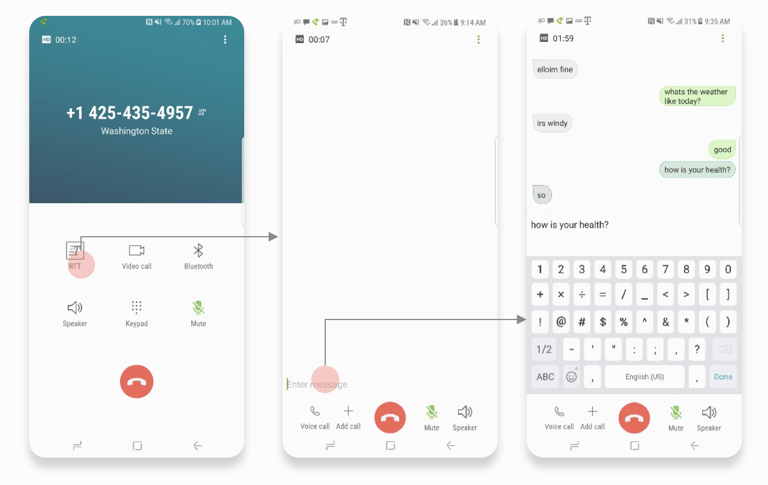
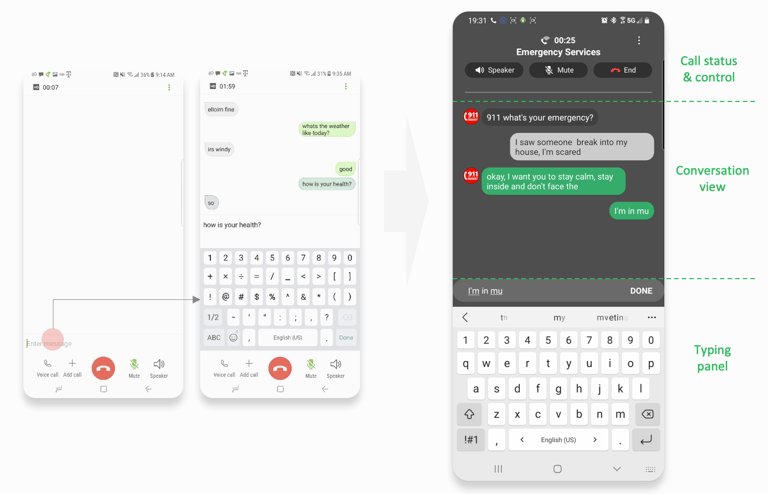
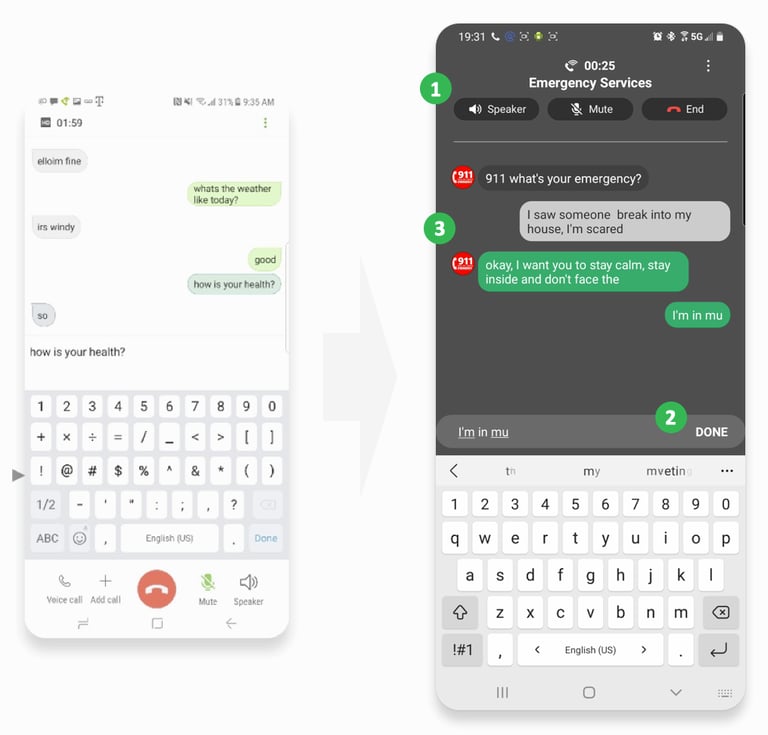
12/2016 FCC mandated wireless RTT rule with backward compatibility to TTY for all Mobile devices support RTT by Dec 2017
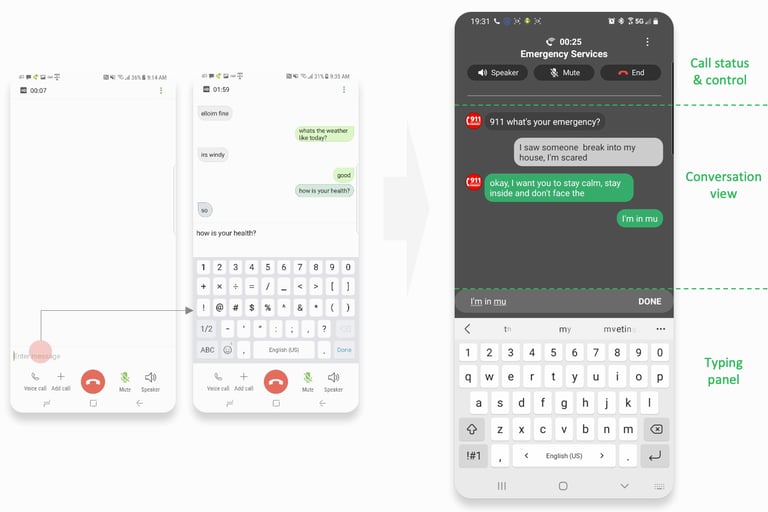

Project Goal
Deaf and Hard of Hearing users should be able to function equally as a hearing person
Launch first device with Real-time text (RTT) in 6 months to meet FCC mandate of 12/2017.
Make Phone Communication Accessible
Design a native call app solution in line with ATIS 0700029 requirement
Ensure backward compatibility with TTY
Process
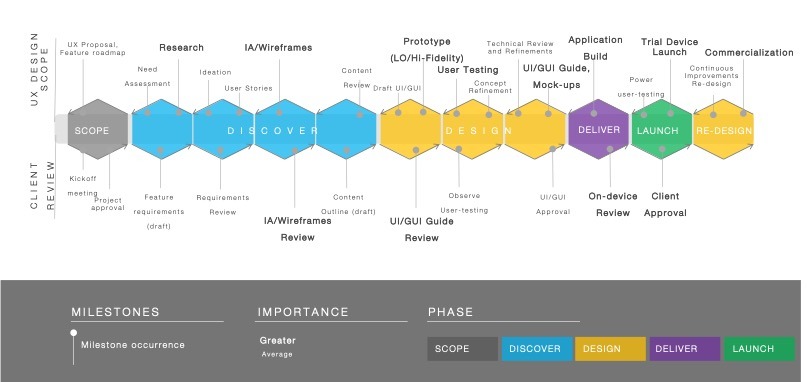

DISCOVER
WHO ARE DEAF AND HARD OF HEARING (DHH) users?
1 in 20 American (approx. 36 million people categorized with some hearing disability)
5% of the world’s population (466 million people)
Identity : ‘Deaf’ vs ‘deaf’
Deaf
Strong deaf identity
Consider themselves culturally deaf
Attends schools and programs for the deaf
Member of the deaf community
deaf
May not attend school for the deaf
Describe hearing loss only in medical terms
Identifies with Hearing people
Does not associate with the deaf community
Assets: TTY and Mobile Devices
Smartphones and tablets are go to devices for the target group over basic/feature phone
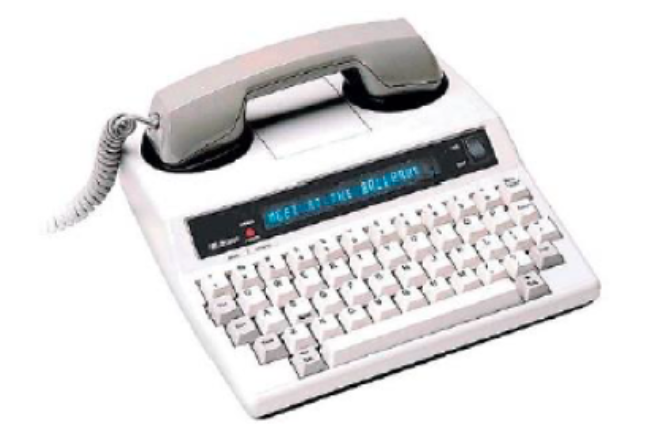
The use of TTY is declining rapidly largely due to declining use of land-line services itself
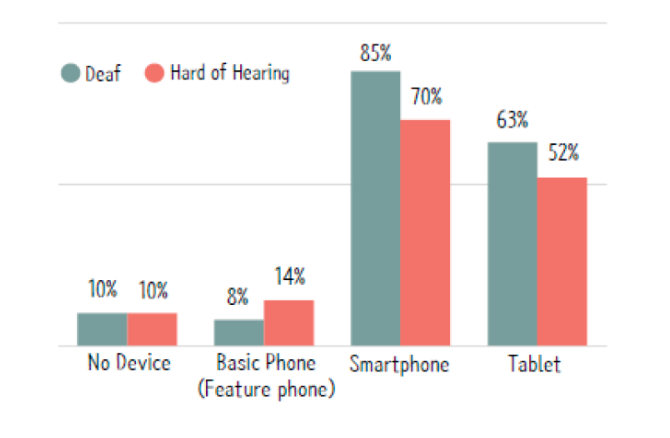
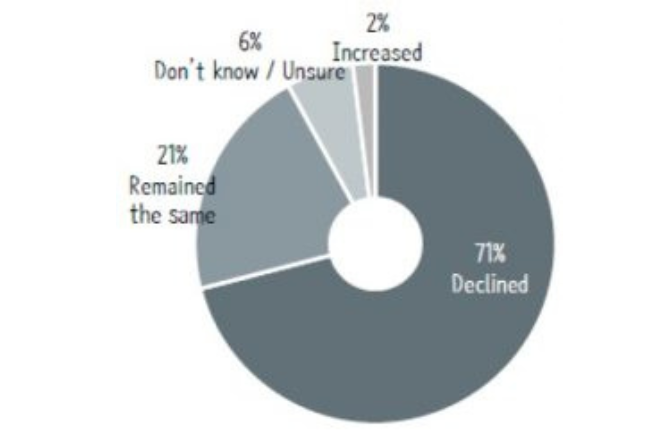
Types of mobile devices used
Last 5 year use of TTY device for communication
Teletypewriter (TTY)) device
Actions: Applications Used
Enjoy text messaging, emailing, web-browsing, and sharing photos and online videos
Very few Hard-of-hearing users make voice calls, almost none see any utility in Phone app for them

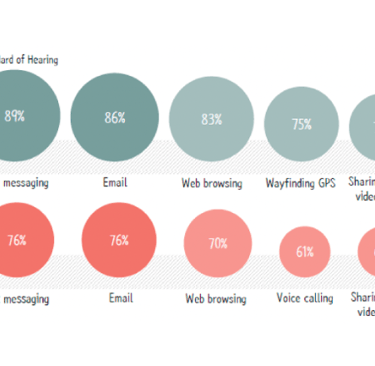
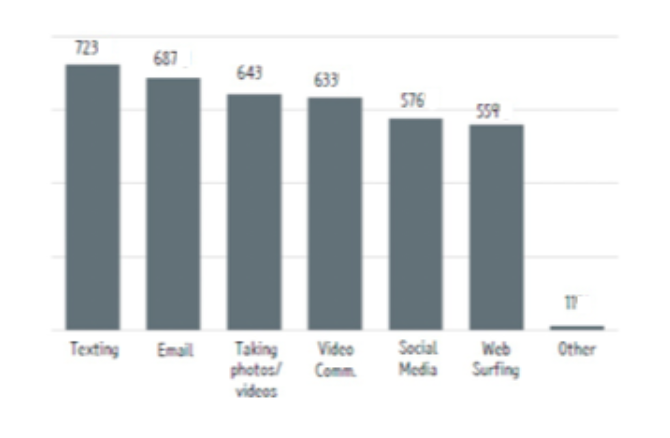
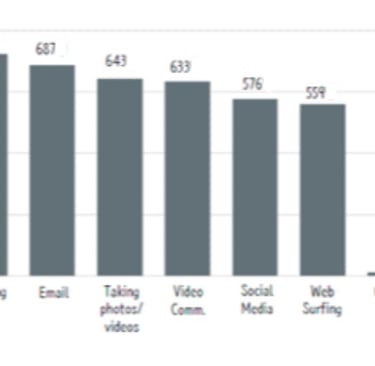
Top-5 reason of smartphone use
Applications usage


Samantha
Samantha is deaf. She works as an administrator at a primary school for deaf children. She considers wireless access essential to her lifestyle. She lives in the city, has a wide circle of friends, and stays active in local community affairs and events.
Sam relies on her smartphone for communication at work – video calls, text messaging, email. She owns a Samsung Galaxy S5 mobile-phone because of its large screen and relative affordability among high-end smartphones. In her leisure time, Sam enjoys watching YouTube and other videos using Closed Captioning feature on her tablet.
Kurt
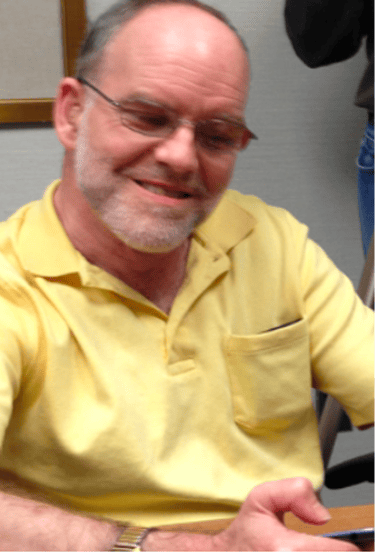
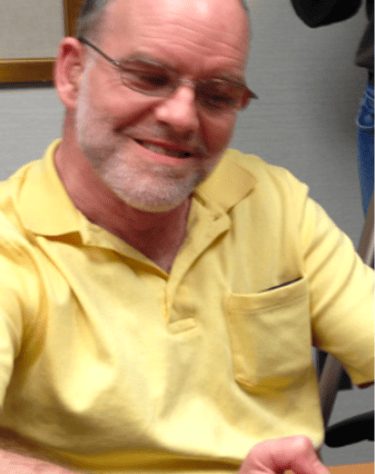
Kurt is hard of hearing. He uses bilateral hearing aids and corrective lenses for age-related loss of visual acuity and hearing. He is retired after a long career in the federal government.
Kurt finally bought his first smartphone many years after they came to dominate the marketplace. He likes many features on smartphones. But he primarily uses just voice and text-based communications. Kurt loves music and has a large collection, but prefers to listen on his powerful home system.
Deaf and hard of hearing people experience this every day.
Emergency calls
Emergency (911) Services are rarely “One Call Away” for Deaf users
Never able to use native Phone app for communications
DHH users rely on TTY devices and Video relay services to communicate
12/2016 FCC mandated wireless RTT rule with backward compatibility to TTY for all Mobile devices support RTT by Dec 2017
Communication Aid
Helping users express themselves through innovative technology solutions.
Voice Access
Enhancing accessibility for those with speech difficulties.

Inclusive Tech
Bridging communication gaps for all users effectively.
Empower Users
Transforming lives through accessible communication tools and support.
→
→
→
→
This app is a lifesaver for non-verbal users, making communication easier and more accessible.
John Doe


★★★★★
Contact Us for Assistance
Reach out to us for support regarding our digital inclusion app for users who cannot speak. We're here to help you.
Support
1234567890
Inquiry
support@digitalapp.com
My office
3721 Single Street
Quincy, MA 02169
Contacts

Ester S. Dossenbach, therapist